Budget cooking
How Do You Set a Grocery Budget You Can Stick To?
NutritionMe Team • 10/11/2026
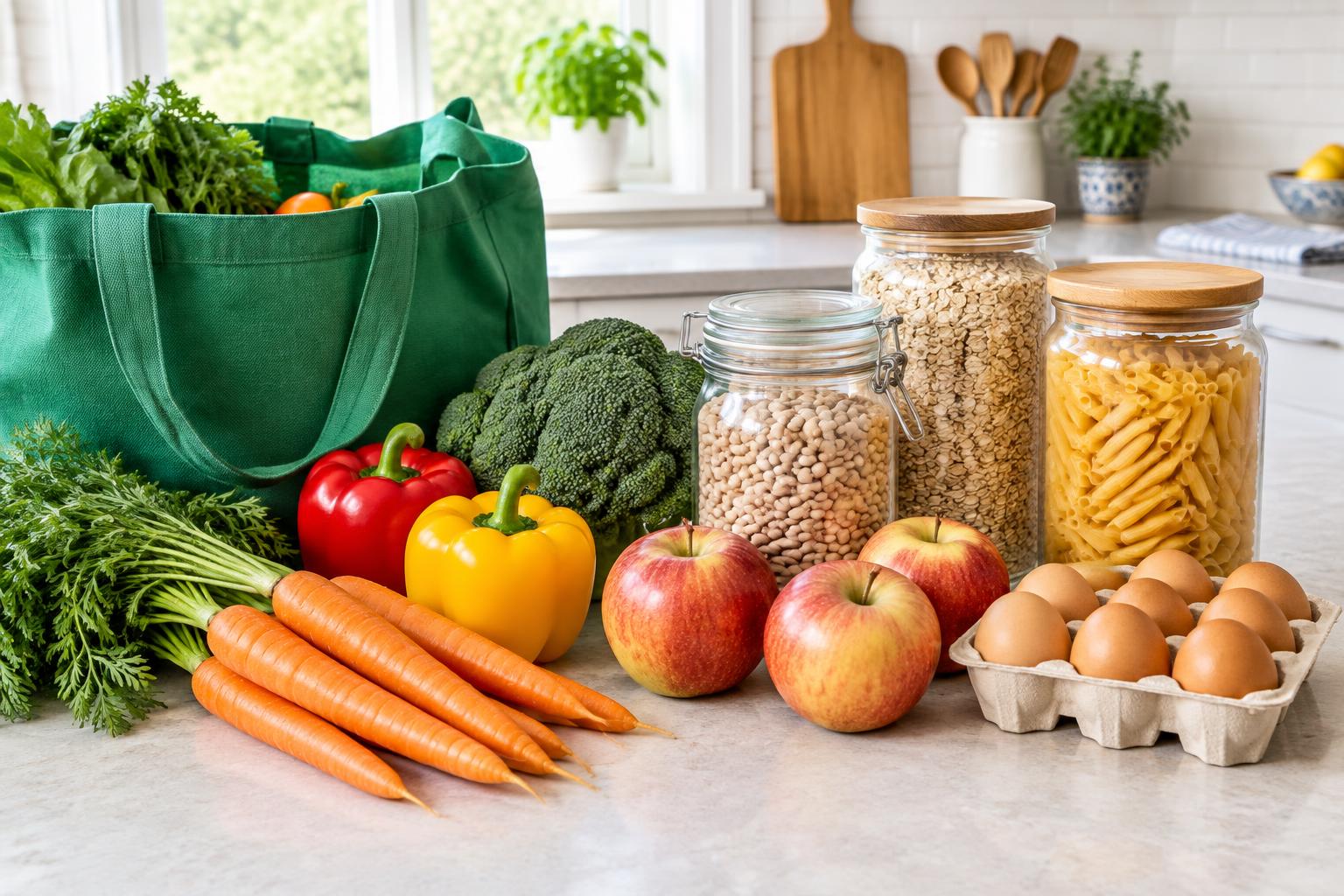
Set a grocery budget by reviewing what you actually spend, deciding what the budget needs to cover, and dividing the available money across your shopping trips. Then plan meals around that limit, leave room for price changes, and adjust after a few weeks rather than forcing an unrealistic target.
Quick answer
- Start with recent receipts or grocery transactions, not someone else’s spending target.
- Separate food from cleaning supplies, toiletries, and other supermarket purchases.
- Budget for breakfasts, lunches, snacks, and drinks as well as dinners.
- Keep part of your budget available for top-ups and irregular purchases.
- Track the running total while you shop, before reaching checkout.
Start with what your groceries actually cost
There is no single grocery budget that works for every household. Local prices, household size, food preferences, cooking equipment, and how often you eat at home all affect what is realistic.
Look through several weeks of receipts or banking transactions. Include small convenience-store stops and online grocery orders; those are easy to overlook when you remember only the main weekly shop.
Separate purchases into three groups:
- Food and drinks for home.
- Nonfood essentials, such as detergent and toilet paper.
- Shopping costs, such as delivery fees and tips.
You can keep all three within one household spending limit, but tracking them separately explains why a grocery bill jumps. Buying laundry detergent does not mean your dinner plan suddenly became more expensive.
If you have no records, use your next two shopping trips as a starting point. A rough baseline is more useful than waiting for a perfect spreadsheet.
Choose a limit that matches your pay cycle
Decide how much money is available for groceries after accounting for your other commitments. Compare that amount with your recent spending. If the gap is large, identify specific changes rather than simply choosing a smaller number.
For example, switching two planned dinners to less expensive meals and reducing unused snack purchases is an actionable adjustment. “Spend less on food” is not.
Match your budget to when money arrives. If you budget monthly, remember that a month is longer than four weeks. Dividing your monthly amount by roughly 4.3 gives a more useful weekly guide, or you can assign money to the actual shopping dates on your calendar.
For an illustrative weekly budget of $100, you might set aside:
- $80 for the main grocery trip.
- $10 for milk, bread, fruit, or other top-ups.
- $10 for price differences or an occasional pantry replacement.
These numbers are only an example, not a recommended spending level. The important part is not committing every dollar before the week begins.
Count the meals your groceries need to cover
Before choosing recipes, count the meals you expect to eat at home. Include packed lunches and the breakfasts that happen almost automatically.
A household needing seven dinners and ten packed lunches has a different shopping requirement from one needing four dinners and no lunches.
Write a short coverage list:
- Breakfasts: two repeatable choices.
- Lunches: leftovers plus one easy backup.
- Dinners: meals for the nights you will cook.
- Snacks and drinks: the items your household actually uses.
Then check your fridge, freezer, and cupboards for the basics on that list. This is a quick duplicate check, not a full pantry reorganization.
Keep a realistic convenience option in the plan. A ready-made soup, frozen meal, or other easy dinner may cost more than cooking from scratch, but it can still fit your budget better than an unplanned delivery order.
Price the whole basket, not just dinner recipes
An inexpensive dinner does not automatically create an inexpensive shopping trip. Breakfast foods, coffee, fruit, condiments, and snacks can take up a meaningful share of the basket.
Use your usual store’s website, app, or recent receipts to estimate the full list. Exact precision is unnecessary; you are looking for whether the plan is comfortably within your limit or clearly over it.
Pay attention to the difference between recipe cost and checkout cost. A recipe might use a small amount of olive oil, but if your bottle is empty, you must pay for a whole replacement today.
If your estimate is too high, make changes in this order:
- Remove duplicates and optional extras.
- Replace ingredients that appear in only one meal.
- Swap an expensive dinner for a simpler one.
- Reconsider package sizes and brands.
Keep enough food for the meals you counted. Removing lunch ingredients to make the total look better simply shifts the spending problem to later.
Use unit prices without falling into the bulk-buy trap
Unit prices show the cost per ounce, pound, liter, or another measure. Compare products using the same unit to see which offers better value.
But the lowest unit price is not always the best purchase for your week. A larger package only helps if you can afford the upfront cost, store it properly, and use it before it spoils.
Ask three questions before buying a larger size:
- Will we use the extra amount?
- Do we have suitable storage space?
- Does buying this leave enough money for everything else on the list?
Treat promotions the same way. A discount on something you did not need is still an extra expense. Check whether a multibuy offer requires purchasing every item to get the advertised price.
Make checkout predictable
Keep a running total on your phone or round item prices up as you add them to your cart. Include applicable taxes, deposits, and shopping fees where relevant.
Mark optional items on your list before shopping. If the total climbs too high, you already know what can wait without dismantling your meal plan in the checkout line.
For online orders, review substitutions and final prices. A replacement may cost more than the item you selected, and unavailable ingredients can leave gaps in your meals.
After shopping, save the receipt somewhere easy to find. You do not need to record every ingredient forever; you need enough information to notice recurring patterns.
Review the budget without treating it like a test
Once a week, check what you spent, what ran out, and what went unused. Change one thing for the next shop.
If you repeatedly need an extra bread-and-milk trip, increase the top-up allowance. If produce regularly goes unused, buy smaller quantities or choose longer-lasting options. If pantry replacements keep causing surprises, carry unused buffer money forward.
A useful budget reflects how your household eats. It should become easier to follow as you learn, not stricter every time something changes.
FAQ
Should groceries and eating out share one budget?
Either approach can work, but track them separately even if they share an overall food limit. Otherwise, a lower grocery bill can hide higher spending on takeout or purchased lunches.
Is shopping once a week always cheaper?
No. Fewer trips can reduce opportunities for impulse purchases, but a planned top-up may help you buy appropriate amounts of fresh food. Compare your total spending and food use, not just the number of store visits.
What if I keep going over my grocery budget?
Check whether the limit covers all the meals, household items, and shopping fees you expect it to cover. Identify repeated overruns and adjust either the purchases or the budget. An unrealistic target is not a useful measure of success.
Take the free, two-minute NutritionMe assessment to get a personalized meal plan and automatic grocery list in minutes, built around foods you like, your schedule, household size, budget, and cooking skill.
Related reading
General nutrition and planning information only. This isn't medical advice and doesn't replace a doctor or registered dietitian.